
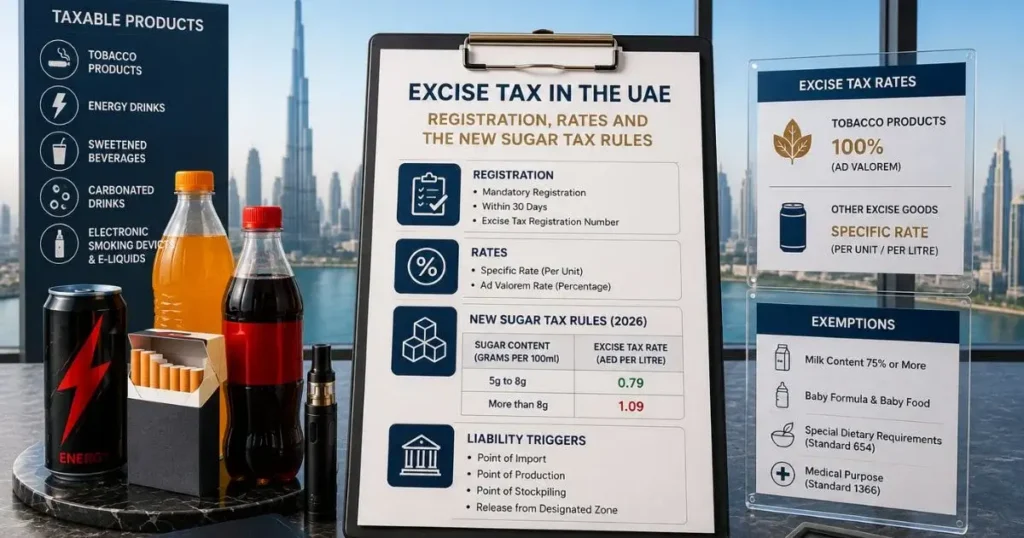
Excise tax is a type of indirect tax placed on specific harmful goods that hurt public health or the environment. The Federal Tax Authority, known as FTA, introduced this rule under Federal Decree Law No. 7 of 2017. This law took effect in October 2017 and still shapes how businesses operate today. It applies directly to tobacco, energy drinks, sweetened beverages, and carbonated drinks.
We’ve guided manufacturers, importers, stockpilers and warehouse keepers across Al Twar 5 through this tax system for years. Designated zone operators often ask us how tax compliance protects their business from fines. This tax also supports government revenue and funds important public services for everyone. Beyond money, it pushes people toward healthier lifestyles through consumption reduction of risky products.
Which Products Are Subject to Excise Tax?
Tobacco, Energy Drinks and Sweetened Beverages
Al Twar 5 shops selling tobacco products must understand their full excise goods list. Energy drinks with caffeine, taurine, guarana, or ginseng count as stimulant substances under this rule. Carbonated beverages and sweetened drinks fall under targeted goods too, alongside aerated beverages. Even unflavored aerated water stays outside this list, but flavored versions do not.
We check product labels for hidden triggers like concentrates, powder, gel, or extracts used in drink mixes. Electronic smoking devices, e-cigarettes and e-liquids with nicotine also fall under this tax rule. Your retail selling price shifts once these products enter your shop shelves. Knowing your full product list early saves you from surprise tax bills later.
The 2026 Tiered Sugar Tax Rates
Starting this year, the UAE runs a tiered tax system based on sugar content in drinks. Products with 5 grams of sugar concentration per 100ml face one rate. Drinks crossing 8 grams per 100ml jump to a higher rate under this system. The exact figures sit at AED 0.79 per litre and AED 1.09 per litre for each tier.
Tobacco still carries a tax rate of 100% using the ad valorem method, while other goods use a specific rate like AED 0.4 per cigarette or AED 0.1 per milliliter. Cabinet Decision No. 52 of 2019 set the base rules behind this Excise Price structure and some products carry a tax rate 50% instead. A milk content exemption applies once a drink hits 75% milk, along with baby formula and baby food. Drinks made for special dietary requirements or a medical purpose under Standard 654 and Standard 1366 stay exempt too, based on GSO rules.
Common Classification Mistakes
Many Al Twar 5 shops mix up taxable goods with non taxable goods on their shelves. An incorrect classification often starts with a wrong product specification on the invoice. Mislabelled products slip through untracked, leading to valuation errors during tax filing. This kind of misreporting can look like tax evasion to the FTA, even by accident.
We see shops confuse their exemption criteria more than any other mistake in this process. A dietary exemption and a medical exemption both need clear proof before you apply them. Without that proof, your claim gets rejected and your tax bill grows instead. Getting this right the first time saves you from repeat corrections later.
Understanding Excise Tax Rates and Liability
How Designated Zones Work
A designated zone works as a fenced geographic area with strict security measures in place. Customs controls watch every entry point to track goods moving in and out. A warehouse keeper manages daily operations inside an excise warehouse within this zone. Businesses can also complete a transfer between designated zones without paying tax right away.
Under the Executive Regulation, a qualifying zone gets treated as outside the state for tax purposes. This means entry and exit monitoring and movement of goods both follow stricter rules than normal. We help shops meet storage conditions required inside zones like JAFZA, DAFZA, and RAK Free Trade Zone. Other approved areas include Abu Dhabi Airport Free Zone and Sharjah Airport International Free Zone across the country. Using these zones supports better cash flow management, though your status needs annual renewal to stay valid.
When Excise Tax Becomes Payable
Tax becomes due once goods get released for consumption inside the country. This also applies the moment products enter free circulation within the local market. Simply put, goods leaving designated zone areas triggers your tax obligation right away.
We tell clients the same rule applies to any sale or use in UAE territory. The tax point here differs slightly from the general rule covered earlier. Instead of an importation trigger, production trigger, or stockpiling trigger, this one centers on movement. Once goods cross that zone boundary, your payment clock starts immediately.
Filing Excise Tax Returns and Maintaining Compliance
Every business must complete electronic filing through EmaraTax or the e-Services portal for excise records. Your tax return filing happens across each monthly tax period, with a strict filing deadline you cannot miss. Payment falls due within 15 days, and this payment deadline uses a Payment Reference Number, known as PRN.
We remind clients to keep proper tax invoices alongside detailed inventory records at all times. Strong record keeping protects your business from disputes during reviews or corrections. Sometimes you need amendments or must submit voluntary disclosures to fix earlier errors. Missing deadlines brings late filing fees, interest on unpaid taxes, and even legal action in serious cases. Keep your IT systems, documentation, and contract terms aligned so nothing slips through the cracks.
Do You Need to Deregister?
Businesses facing full cessation of activity or complete business closure must file a deregistration application. This step matters even after liquidation or legal closing of your company structure. A structural change inside your business can also trigger this same requirement.
We guide clients through this within 20 business days, since the FTA reviews each case closely. You must show no intention to resume activity, often proven across six months of inactivity. Miss this step, and a late deregistration penalty near AED 10,000 applies to your file. Before approval, you must settle your final tax return and complete any outstanding settled tax dues owed.
Common Excise Tax Mistakes Businesses Make
Shops in Al Twar 5 often struggle with wrong product categorization, which causes registration delays down the line. Inventory discrepancies and incorrect sugar calculations rank among the most frequent errors we catch. Poor stock tracking and import declaration errors also slow down smooth tax filing every quarter.
We treat non compliance seriously, since it can trigger penal measures after audit findings surface. False reporting looks a lot like tax fraud to the FTA, even without bad intent. Left unresolved, this leads to seizure of goods, licence suspension, or full licence cancellation. In extreme cases, criminal prosecution follows alongside repeated price declaration errors on customs forms.
Preparing for an FTA Excise Tax Audit
Strong record retention across five years keeps your business ready for any review. Regular inventory reconciliation paired with clear import documentation builds a solid audit file. Detailed manufacturing records and accurate product data protect you from unexpected findings.
We build internal controls early, since this shapes real audit readiness for every client. An FTA audit runs smoother once your compliance framework stays consistent year to year. Some businesses seek professional representation to manage this process without added stress. Staying transparent and accountable throughout keeps your excise file clean and trusted.
How Excise Tax Connects with VAT and Corporate Tax
Excise tax works alongside VAT and corporate tax inside your full accounting picture. Every excise charge feeds into your cost of goods sold and shapes your financial statements. Your accounting systems must track all three taxes together without gaps or errors.
We help clients apply the AED 375,000 threshold and the AED 187,500 voluntary threshold correctly for VAT. A Qualifying Free Zone Person, known as QFZP, can access a 0% corporate tax rate under set conditions. This applies to a Free Zone Person trading with mainland UAE as an importer of record. Rules under Article 18 and related Ministerial Decision guidance require proof of core income generating activities.
Frequently Asked Questions
Which products are subject to Excise Tax in the UAE?
Tobacco, energy drinks, sweetened beverages and electronic smoking devices all fall under this tax.
How does the new sugar tax work?
Drinks get taxed based on their sugar content per 100ml, with higher sugar facing a higher rate.
Are imported products subject to Excise Tax?
Yes. Imported goods face the same tax rules as locally manufactured goods once they enter the UAE.
Do businesses in Designated Zones pay Excise Tax?
Only once goods leave the zone for sale or use in the UAE does tax apply.
What happens if I fail to register?
You face a penalty near AED 10,000, along with added compliance risks over time.
How long should Excise Tax records be retained?
Keep your records for five years to stay ready for any FTA review.
Book Excise Tax Registration Help
Al Twar 5 businesses shouldn’t face excise tax alone. Assurance Corps offers full registration assistance paired with ongoing compliance support for every client. We manage your Emara Tax filing, strengthen your audit preparation, and handle designated zone coordination on your behalf. We focus on penalty avoidance through proactive tax advisory built around your business needs. Book your free consultation today and let us handle the complex parts of excise tax for you.